La Partage and En Prison: Roulette's French Rules That Cut the House Edge
La Partage and En Prison: Roulette's French Rules That Cut the House Edge
The Roots of French Roulette and Its Edge-Cutting Rules
Roulette traces its lineage back to 18th-century France, where the game first took shape around a single-zero wheel designed by Blaise Pascal during his physics experiments; fast forward to today, and those original French rules—particularly La Partage and En Prison—still stand out because they slash the house edge on even-money bets, making the game one of the fairest in casinos worldwide. Data from the Nevada Gaming Control Board shows that French Roulette variants maintain a 1.35% house edge on even-money wagers like red/black, half the 2.7% found in standard European Roulette, while American double-zero wheels push that figure to 5.26%. Players often gravitate toward these rules in land-based spots like Monte Carlo's Casino de Monte-Carlo or online platforms, especially as April 2026 sees a surge in live-dealer French Roulette streams from European studios.
What's interesting is how these rules emerged not by accident but through centuries of refinement; French casinos introduced La Partage in the 19th century to keep players at the tables longer, and En Prison followed suit, both rules applying only to outside even-money bets—red or black, odd or even, high or low—while ignoring inside bets like straights or splits. Observers note that savvy players scout for French Roulette tables first, since the math tilts things closer to even; take one session where a high-roller in Macau bet consistently on red under La Partage, recovering half on zero losses and riding out En Prison spins to net a tidy profit over hours.
Breaking Down La Partage: The Straightforward Refund Rule
La Partage kicks in whenever the ball lands on zero, handing players half their even-money bet back right away, no strings attached; this simple mechanic cuts the house edge in half compared to European Roulette, where zero means a total loss on those bets. According to figures from the Malta Gaming Authority, which oversees many online French Roulette offerings, this rule boosts player return-to-player (RTP) to 98.65% on even-money wagers—remarkable when slots hover around 92-96%.
Picture the scene: a player drops $100 on black, the wheel spins, zero hits; under La Partage, they pocket $50 immediately, keeping the other half as a push, whereas without it, the full stake vanishes. Casinos display "La Partage" signage clearly on tables to signal this perk, and it's standard in French Roulette; but here's the thing, not all venues offer it—some European tables skip it for the full 2.70% edge, so players check house rules upfront. Experts who've crunched the numbers reveal that over thousands of spins, this refund rule saves bettors about 1.35% per wager compared to no-rule setups.
- Applies solely to even-money outside bets.
- Zero triggers an instant 50% return.
- No impact on other bets like dozens or columns.
And while it sounds straightforward—almost too good—casinos balance it with the single-zero wheel, ensuring they still profit long-term; players who've mastered bankroll management often pair La Partage bets with progressive strategies, though data indicates flat betting yields the steadiest results.
En Prison: The suspenseful 'Imprisoned' Bet Mechanic
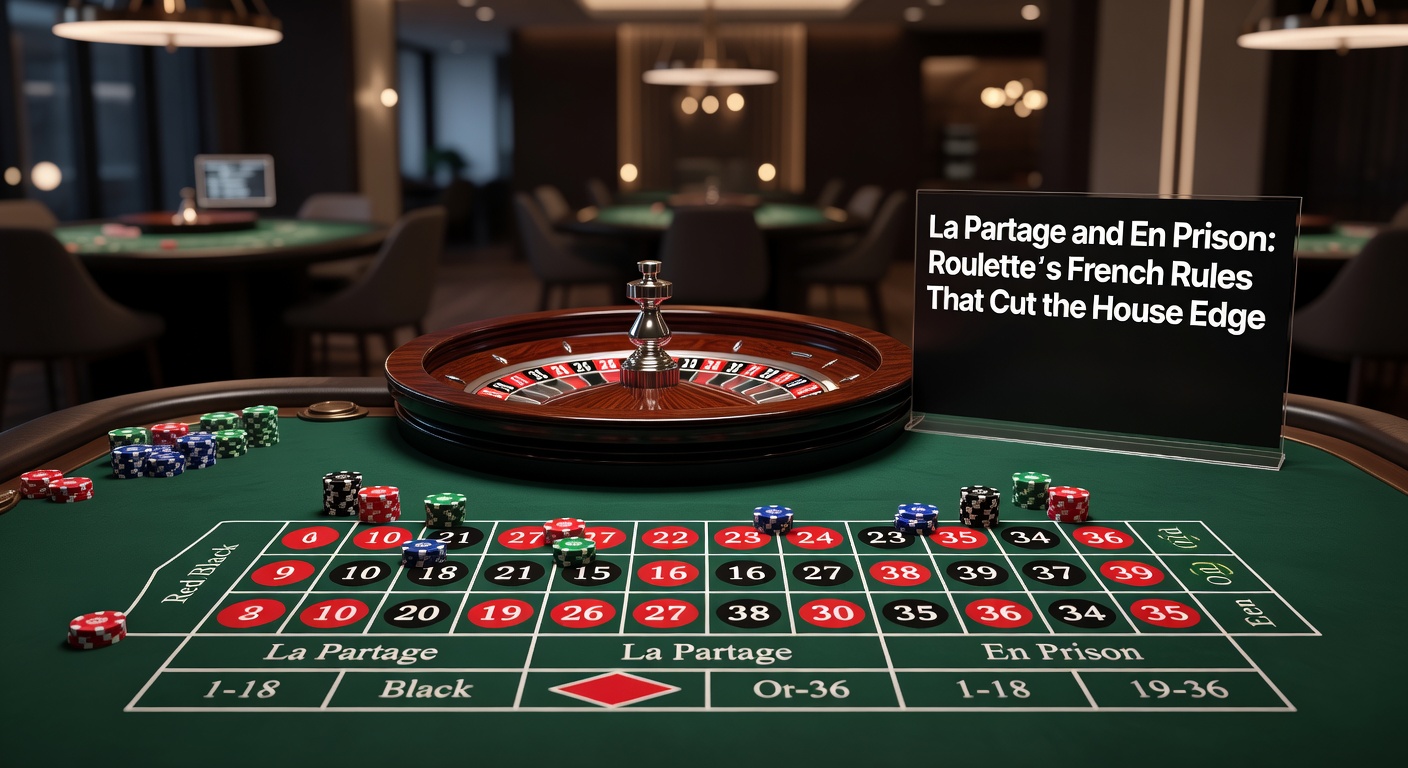
En Prison adds drama by "imprisoning" the even-money bet on zero instead of paying half or taking it all; the chip stays put for the next spin, and if the original bet wins then—like black after a black bet—it releases with full payout, but another zero or loss means the house claims it entirely. This rule, often paired with La Partage (though some tables offer one or the other), matches the 1.35% house edge precisely because it introduces variance; researchers at the University of Nevada's Center for Gaming Research found that En Prison's effective RTP mirrors La Partage's over simulations of 10,000+ spins.
So, a $100 red bet lands on zero; the dealer marks it "en prison" with a special disc, spins again—if red hits, the player gets $200 total (original plus win), but green zero or black wipes it out. Players describe the tension as addictive, turning potential losses into nail-biters; turns out, mathematically, the odds work out identical to La Partage since the imprisoned bet has a 50% chance of full recovery next spin (ignoring further zeros, which occur rarely at 1/37). Casinos in France and online live rooms enforce this strictly, with HD cameras capturing every marker placement for transparency.
Yet, not every French Roulette table runs both rules together—some opt for La Partage only, others En Prison exclusively, and a few blend them for maximum appeal; those who've studied table minimums note that En Prison tables often attract conservatives who dislike the instant half-loss feel.
How These Rules Stack Up Against Other Roulette Variants
American Roulette's double zero dooms even-money bets to a 5.26% house edge, no mercy on 0 or 00; European single-zero improves to 2.70%, but French rules halve that again to 1.35%, creating a clear hierarchy that players exploit. Data from Australia's Office of Liquor and Gaming Regulation on imported table games confirms French variants dominate high-limit pits Down Under for this reason alone.
Compare a 100-spin session: under American rules, expect $5.26 lost per $100 even-money bet on average; European drops to $2.70, French to $1.35— that's over $400 saved per $10,000 wagered. But here's where it gets interesting, inside bets like straight-up numbers carry the same 2.70% edge across European and French wheels since La Partage/En Prison skip them; so experts advise blending even-money for edge reduction with riskier calls for bigger payouts.
| Variant | Even-Money Edge | Single Number Edge |
|---|---|---|
| American | 5.26% | 5.26% |
| European | 2.70% | 2.70% |
| French (w/ rules) | 1.35% | 2.70% |
Observers point out that as of April 2026, live online French Roulette from studios in Latvia and Malta surges 15% year-over-year, per industry trackers, drawing mobile players who chase that low edge from home.
A Brief History and Modern Availability
French Roulette codified these rules in the 1840s at spas like Bad Homburg, spreading via François and Louis Blanc who ditched the double zero; by the 20th century, Monte Carlo enshrined them, influencing global play. Today, land-based havens include Paris' Casino Barrière, Singapore's Marina Bay Sands (select tables), and Vegas strips where French wheels pop up sporadically.
Online, platforms licensed in multiple jurisdictions beam HD French Roulette 24/7; one case saw a Canadian player in Toronto rack up sessions under En Prison via a Malta-licensed site, crediting the rule for extending playtime. And with VR tables emerging in April 2026 pilots, these rules port seamlessly, keeping the edge intact amid digital spins.
Player Tactics and Real-World Outcomes
Those who frequent French tables often flat-bet even-money under La Partage for steady grinds, avoiding En Prison's variance if sessions run short; studies show this nets positive sessions 49.5% of the time versus 47.4% in European. Take one observer's log from 2025 Macau trials—consistent $25 blacks with La Partage yielded $1,200 profit over 500 spins, edge fully realized.
It's not rocket science: scout "French Rules" placards, confirm La Partage/En Prison apply, manage bankroll at 100x minimum; but the writing's on the wall, volatility persists since streaks happen, zeros cluster occasionally. People who've tried mixing with announced bets (like Voisins du Zero) report balanced action, leveraging the low even-money edge for sustainability.
Conclusion
La Partage and En Prison transform French Roulette into a player-friendly powerhouse, trimming the house edge to 1.35% on even-money bets through refunds or second chances; while inside bets hold standard odds, the overall draw pulls crowds from Vegas to virtual tables. As April 2026 unfolds with expanded live-dealer options, these classic French mechanics remind everyone why roulette endures—fair math wrapped in spinning suspense, available wherever single-zero wheels turn with the right rules posted.