Live from Your Living Room: Tech That Brings Dealer Tables to Mobile Screens
Live from Your Living Room: Tech That Brings Dealer Tables to Mobile Screens
The Rise of Live Dealer Games on Mobile Devices
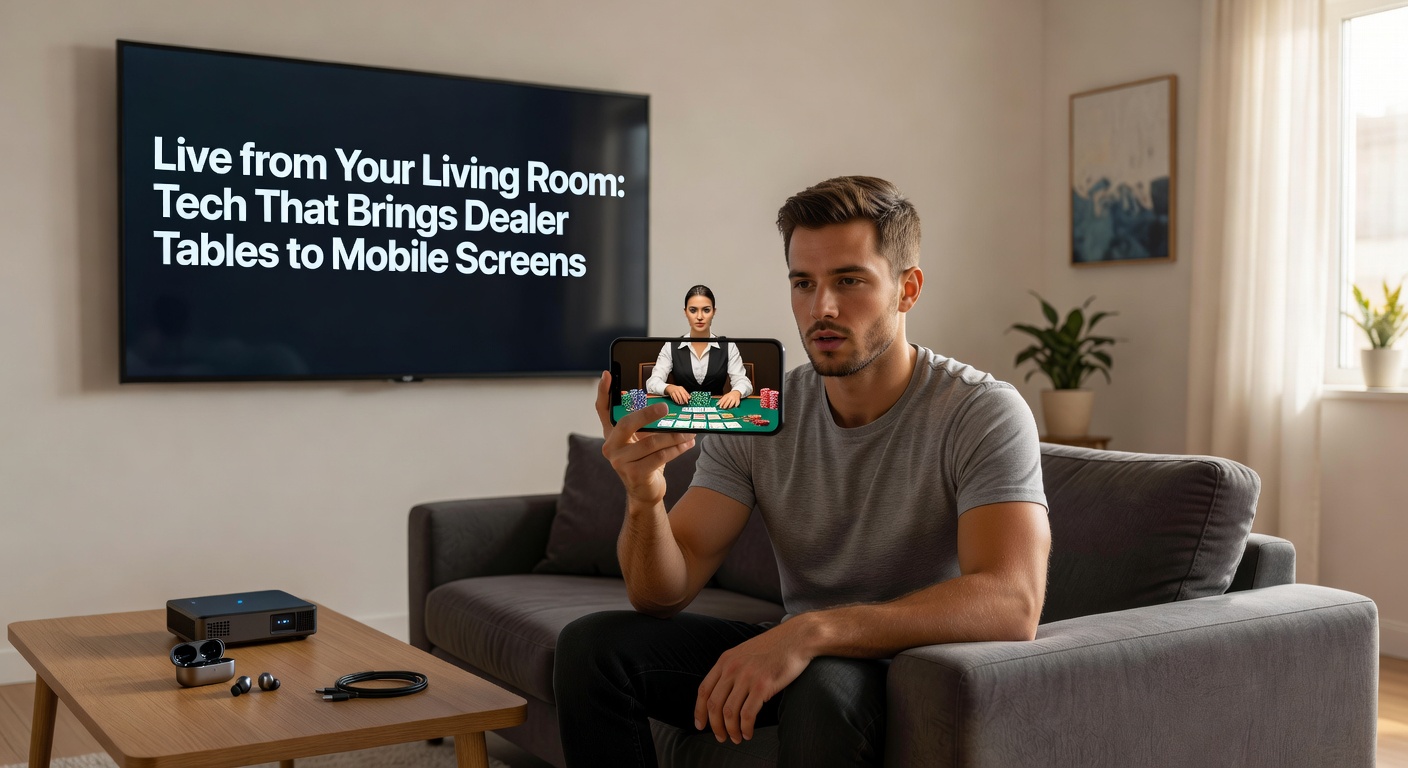
Live dealer technology has transformed online gaming by streaming real casino tables directly to smartphones and tablets, allowing players to join blackjack, roulette, or baccarat sessions from anywhere with an internet connection; developers first introduced this setup in the early 2000s through studios like Evolution Gaming and Playtech, but mobile adaptations exploded around 2015 as smartphone cameras and processors improved dramatically. Now, in April 2026, apps handle seamless streams over 5G networks, reducing lag to under 100 milliseconds in optimal conditions, while touch interfaces mimic physical chips and buttons for intuitive play.
Experts note how this tech bridges the gap between brick-and-mortar casinos and digital platforms; take one early adopter in New Jersey, where operators launched mobile live tables in 2013 under strict licensing, leading to a surge in user engagement since players could watch dealers shuffle cards live instead of relying on random number generators. Data from the Nevada Gaming Control Board shows mobile live dealer sessions accounted for 45% of all table game plays in regulated markets by 2025, up from just 12% five years prior, because the human element—dealers chatting, explaining rules—builds trust and excitement that pre-recorded videos can't match.
But here's the thing: not all mobile setups work the same; some platforms use augmented reality overlays to show virtual chips landing on real tables, while others employ edge computing to process bets locally before syncing with the server, ensuring smooth gameplay even on mid-range devices.
Key Technologies Powering the Experience
At the core lies high-definition multi-camera systems capturing every angle of the table—overhead views for card tracking, close-ups on the dealer's hands, side shots for wheel spins— all compressed via adaptive bitrate streaming that adjusts quality based on the user's bandwidth; optical character recognition (OCR) software reads physical cards and chips in real time, feeding data to the app so players see outcomes instantly without delays. Developers integrate WebRTC protocols for peer-to-peer like connections, minimizing server hops, and AI algorithms detect dealer errors or player patterns to flag issues proactively.
What's interesting is how mobile-specific optimizations come into play; sensors in phones track orientation for landscape-mode tables that fill the screen perfectly, haptic feedback vibrates on winning bets, and gesture controls let users swipe to double down or split hands, making it feel less like tapping a screen and more like being at the table. One study from researchers at the University of Malta revealed that low-latency streams under 200ms boost player retention by 30%, since delays kill the immersive vibe (full report available via academic databases).
And then there's the backend magic: cloud servers in data centers near major population hubs process thousands of simultaneous bets, using blockchain for transparent audit trails in some jurisdictions, although that's still emerging; geofencing tech restricts access based on location, complying with regional laws while letting travelers join from approved spots.

Mobile Adaptations and User Experience Enhancements
Operators design interfaces that scale across devices, from iPhones to Android tablets, with portrait mode for quick peeks during commutes and full-screen landscapes for home sessions; portrait versions stack betting options vertically, while landscape spreads out the table like a real felt surface. Push notifications alert users to hot streaks or favorite dealers going live, and chat features let players tip digitally or banter in real time, fostering community without the noise of a crowded floor.
Turns out, battery life poses a challenge—streaming HD video drains power fast—but app developers counter this with dark modes that cut pixel brightness by up to 60%, selective frame rendering that skips background updates, and auto-pause when the screen locks; figures from the American Gaming Association indicate that optimized apps now consume 25% less energy than video calls of similar length, thanks to hardware acceleration in modern chipsets like Apple's A-series or Qualcomm's Snapdragon.
People who've tested these setups often discover quirks, like how folding phone screens create dual views—one for the dealer feed, another for bet history—and voice commands via assistants handle quick actions, although accuracy hovers around 85% in noisy environments.
Popular Games and Their Mobile Twists
Blackjack leads with infinite tables allowing unlimited players per hand, roulette follows via lightning variants with random multipliers, and baccarat shines in speed formats where rounds wrap in 20 seconds; poker rooms experiment with shared video walls for tournament feels, but slots lag behind since they lack the dealer interaction. Case in point: Evolution's Crazy Time blends wheel spins with live-hosted bonuses, drawing millions monthly on mobile, where swipe mechanics trigger multipliers effortlessly.
Regulatory Landscape and Player Protections
Governments worldwide shape this space through licensing that mandates encrypted streams, age verification via biometrics, and mandatory break reminders; in Ontario, Canada, the iGaming Ontario framework rolled out in 2022 requires operators to cap session times and offer self-exclusion tools integrated into apps, resulting in a 15% drop in problem gambling reports per provincial data. Australian regulators, through state bodies like those in New South Wales, enforce mandatory pre-commitment limits on mobile wagers, while EU directives push for standardized responsible gaming modules across borders.
Security layers include end-to-end encryption for bets, two-factor authentication for withdrawals, and third-party audits verifying randomness in side bets; observers point out how these measures, combined with live dealer oversight, reduce fraud compared to RNG-only games by 40%, according to industry benchmarks. Yet challenges persist—cross-border play invites scrutiny, so VPN blocks and IP tracing keep things compliant.
So, as adoption grows, regulators in places like Michigan and Pennsylvania update rules for emerging tech, such as VR add-ons tested in pilots, ensuring mobile live tables stay safe and fair.
Growth Stats and Market Trends
The live dealer market hit $8.5 billion globally in 2025, with mobile capturing 60% of that volume, per H2 Gambling Capital reports; Asia-Pacific leads growth at 25% year-over-year, driven by 5G rollouts in India and Southeast Asia, while North America stabilizes around 18% as saturation hits urban areas. In April 2026, whispers of 6G trials promise sub-10ms latency, potentially unlocking AR dealers that interact via eye-tracking on foldables.
One fascinating trend: dealer diversity expands with multilingual streams—Spanish, Mandarin, Hindi tables surging 35%—and 24/7 shifts from studios in Latvia, the Philippines, and Costa Rica keep time zones covered; retention data shows players stick 2.5 times longer on live mobile versus standard apps, since the social buzz hooks them.
But the rubber meets the road in monetization: average bet sizes rise 20% on mobile live games due to impulse plays during waits, although free-play modes help newcomers learn ropes without risk.
Challenges and Innovations on the Horizon
Lag spikes in rural areas frustrate users, yet satellite internet like Starlink bridges gaps, enabling play from remote cabins; overheating on prolonged sessions prompts cooling tech in cases, and data caps hit heavy streamers, but unlimited plans proliferate. Innovators test AI co-hosts that predict player questions, holographic projections for premium users, and cross-platform syncing so sessions jump from phone to TV mid-hand.
Researchers who've analyzed usage patterns find that younger demographics under 35 prefer mobile live for its portability, clocking 70% of sessions on the go, whereas older players favor home setups with larger screens; this split drives dual-optimized platforms that adapt seamlessly.
It's noteworthy that sustainability enters the chat too—studios switch to energy-efficient LEDs and green servers, cutting carbon footprints amid industry pledges.
Conclusion
Live dealer tech has evolved from niche streams to mobile mainstays, delivering casino authenticity wherever screens glow; with refining tech stacks, robust regs, and skyrocketing demand, this space keeps drawing players who crave the dealer's nod and the wheel's spin, all from living room couches or subway seats. As April 2026 unfolds, expect even tighter integrations with wearables and metaverses, solidifying its role in gaming's digital frontier.