Mapping Transaction Flow Patterns Across Mobile Platforms and Their Influence on Variant Selections in Digital Poker Environments for Segmented User Groups
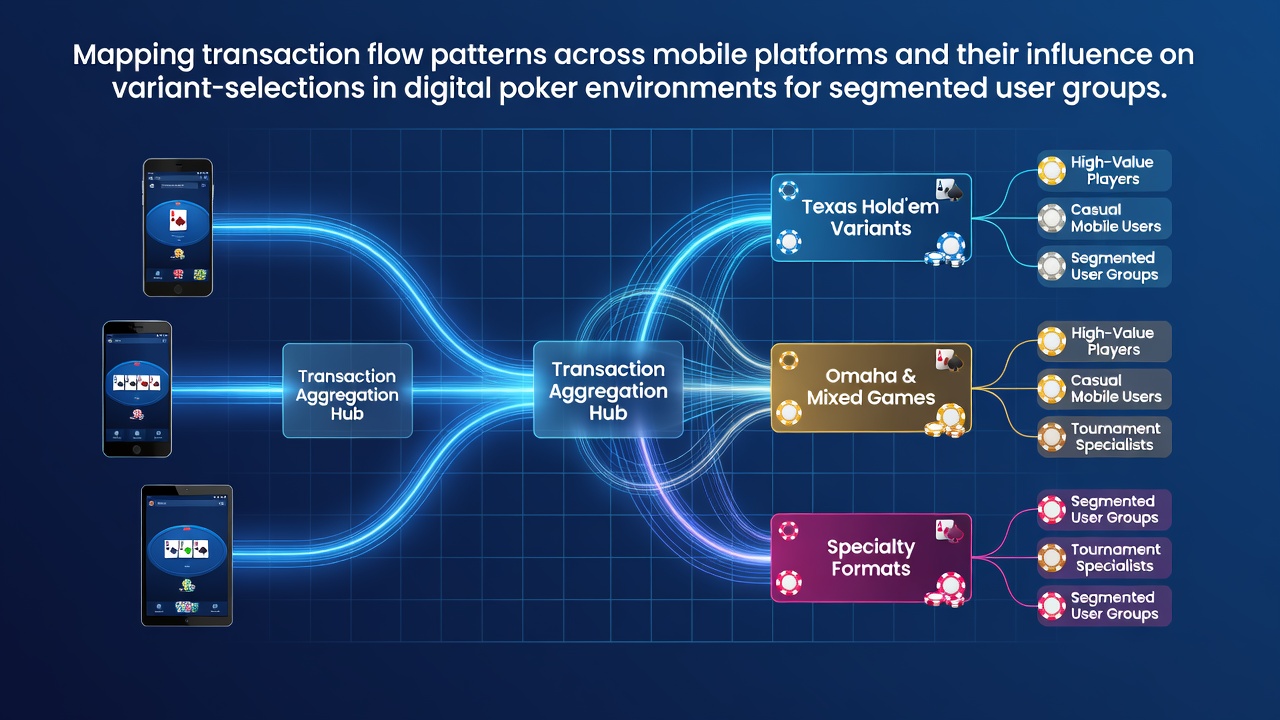
Transaction flows on mobile platforms shape how users navigate digital poker environments, with payment sequences, deposit frequencies, and withdrawal timings creating distinct patterns that correlate with choices among poker variants such as Texas Hold'em, Omaha, and Seven Card Stud. Industry data collected through June 2026 shows these patterns emerging across iOS and Android ecosystems, where integrated banking tools and third-party processors direct users toward specific game formats based on transaction speed and volume.
Transaction Pathways in Mobile Poker Systems
Payment processing on mobile devices follows layered routes that include direct carrier billing, digital wallets, and bank transfers, each generating logs that operators analyze for behavioral signals. Those logs reveal how quicker deposit methods often precede selections of faster-paced variants, while slower verification steps align with longer session formats like multi-table tournaments. Observers note that segmented groups defined by spending thresholds demonstrate consistent preferences once their transaction histories accumulate over several months.
Platform Differences and Flow Mapping
Android environments typically route transactions through more fragmented processors than iOS, leading to varied completion rates that affect real-time variant availability. Research from academic institutions tracking user cohorts indicates that Android users with frequent micro-transactions gravitate toward cash-game variants requiring smaller initial commitments, whereas iOS patterns show higher engagement with structured sit-and-go formats after larger single deposits. These differences appear in aggregated datasets released during the first half of 2026, highlighting platform-specific friction points that steer player decisions without altering the underlying game rules.
Influence on Variant Selection Among User Segments
High-volume transactors, identified through cumulative monthly flows exceeding defined thresholds, select pot-limit Omaha more often once their payment history includes multiple rapid deposits within single sessions. Lower-volume segments, characterized by periodic larger transfers, show stronger correlations with no-limit Hold'em tables that reward extended decision windows. Data compiled by regional gaming authorities in North America and Australia demonstrates these associations across thousands of accounts, where transaction timestamps align with variant switches logged in application servers.
Younger demographics, segmented by age brackets reported in platform analytics, combine quick wallet top-ups with frequent switches between short-handed and full-ring configurations. Older cohorts exhibit steadier transaction rhythms that correspond to fixed-limit variants, according to longitudinal studies examining mobile activity from early 2025 through June 2026. These patterns hold across geographic clusters, though regional banking regulations introduce additional variables in flow timing.

Segmentation Frameworks and Data Correlations
Operators apply clustering techniques to transaction datasets, grouping users by deposit frequency, average transfer size, and preferred funding sources. One study from a European research consortium found that clusters relying on e-wallet chains displayed elevated selection rates for mixed-game variants when withdrawal processing times remained under ten minutes. Another dataset from Canadian regulatory filings revealed that users with recurring subscription-style deposits maintained longer engagements in tournament structures, independent of promotional incentives.
Cross-platform comparisons further illustrate how integrated banking APIs reduce drop-off between deposit completion and game entry, thereby increasing the likelihood that a user remains within the same variant category for subsequent sessions. Figures released in mid-2026 by industry trade groups confirm these retention effects across multiple operators, showing measurable shifts when transaction pathways incorporate biometric confirmations versus manual entry steps.
Regulatory Context and Reporting Standards
Authorities in multiple jurisdictions require operators to maintain detailed transaction records that support pattern analysis for responsible gaming purposes. These records, when anonymized and aggregated, supply the raw material for mapping exercises that connect financial flows to game-type distributions. Reports from bodies such as the Nevada Gaming Control Board and the Australian Communications and Media Authority include metrics on mobile transaction volumes that indirectly inform variant preference studies conducted by independent analysts.
Conclusion
Transaction flow patterns across mobile platforms continue to provide measurable signals that operators and researchers use to understand variant selections within segmented user populations. Data gathered through June 2026 underscores consistent associations between payment characteristics and poker format choices, with platform architecture and user demographics acting as moderating factors. Continued refinement of these mapping methods supports more precise operational adjustments while remaining grounded in verifiable transaction records.